
What Are N+1 and 2N? Which Redundancy Level Should You Choose for a Data Center?
When IT systems go down, everything stops: transactions, operations, customer access to your services. So when choosing where to host your infrastructure, the key question is not only “where …

Nov 2, 2026
When IT systems go down, everything stops: transactions, operations, customer access to your services. So when choosing where to host your infrastructure, the key question is not only “where is this Data Center?” but also “what happens if a single component, or an entire system, fails?” The answer lies in the redundancy level of the power and cooling infrastructure, usually described with two terms: N+1 and 2N.
What does “N” mean?
N is the minimum number of units needed to run the full load. For example, if a cooling system needs 4 units running at the same time to serve the entire server room, then N = 4. Every redundancy model starts from this number.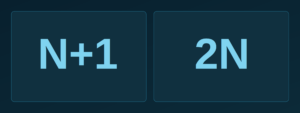
N+1: component-level redundancy
N+1 means that on top of the N units required to operate, the system has 1 additional spare unit. If a unit fails or needs maintenance, the spare takes over so the system keeps its full capacity.- Protection at the unit level: one failed unit does not interrupt service.
- Investment and operating costs are lower than duplicating the entire system.
- Units usually still share the same feed path, so a single point of failure can remain in the power feed or in a shared path.
2N: full system redundancy
2N means two completely independent systems, each able to carry 100% of the load. The two systems have separate feed paths and separate equipment. The customer’s equipment uses two power cords (dual-corded), each connected to a different system.- If one entire system stops working, the other keeps running normally.
- There is no single point of failure between the two feed paths.
- Well suited to systems that cannot tolerate interruption, such as banking, finance and payments.
- Higher investment cost, since the infrastructure is built and operated twice.
N+1 vs 2N at a glance
| Criteria | N+1 | 2N |
|---|---|---|
| How redundancy works | 1 additional spare unit | Entire system duplicated |
| Level of protection | Unit level | System level |
| Single point of failure | Remains in the shared feed path | None between the two feed paths |
| Cost | Optimized | Higher |
| Best for | Most businesses | Mission-critical systems that cannot tolerate interruption |
Which model should your business choose?
There is no single right answer. Three questions help you decide:- How much does every hour of downtime cost? Include revenue, recovery costs, and the impact on reputation and customers.
- Which systems are your core systems? Transaction, payment or customer-data applications usually need a higher redundancy level than internal systems or test environments.
- Does your industry have specific requirements? Some sectors, such as finance and banking, have high continuity requirements. Check the regulations and the requirements of your regulator or partners.
What to ask your Data Center provider
A redundancy level only means something when it is stated clearly. When comparing providers, ask:- Which parts of the infrastructure does N+1 or 2N apply to: power, UPS, generators, cooling, or everything?
- Are the two power feeds truly independent of each other?
- Does the facility offer multi-carrier connectivity, to avoid depending on a single network path?
- Is there a 24/7 operations team with a clear incident-handling process?
- Is your equipment dual-corded, so that it can take advantage of a 2N model?
What options does Telehouse Vietnam offer?
The Standard 42U package from Telehouse Vietnam comes in two options, depending on the redundancy level your business needs:| Item | N+1 option | 2N power option |
|---|---|---|
| Power | N+1 redundant UPS | 2N, two independent power feeds (dual power feeds) |
| Cooling | N+1 redundant air conditioning | N+1 redundancy |
| Temperature | 20°C – 24°C | 20°C – 24°C |
| Humidity | 40% – 55% | 40% – 55% |
| Fire protection | VESDA, FM200 | VESDA, FM200 |
| Monitoring | CCTV, 24/7 operation | CCTV, 24/7 operation |
Conclusion
N+1 and 2N are not “good” and “bad”. They are two investment levels for two levels of risk. The most effective approach is to start with one question: which of your systems cannot stop, and how long can the business tolerate it being down? Considering infrastructure options for your systems? Contact the Telehouse Vietnam team for advice on the right option.Bài viết liên quan
-

What Is Colocation? Why Should Businesses Host Their Servers at a Professional Data Center?
When IT systems go down, everything stops — transactions, operations, customer data. That’s why more and more businesses in Vietnam are askin… -

What Is ISO 22301? Is Your IT Infrastructure Truly Ready for a Disaster?
No one wants to think about worst-case scenarios — but the organizations that prepare for them are the ones that survive a crisis. ISO 22301 is the… -
What Is DC-DR? Why Financial Institutions Cannot Afford to Overlook Disaster Recovery
When a primary system goes down — whether from a power outage, natural disaster or cyberattack — the question is never “will we be affected?&… -

What Is ISO/IEC 27001? Why This Information Security Standard Matters When Choosing a Data Center
When evaluating data center providers, many businesses ask: “Are you ISO 27001 certified?” — but not everyone fully understands what th… -

Who Is Telehouse Vietnam? 16 Years of Building Trusted Digital Infrastructure
Founded in 2010, Telehouse Vietnam is a professional data center infrastructure provider — combining local deployment expertise with the global DC … -

Telehouse’s highest standard Data Center launched in Vietnam
Telehouse Vietnam’s 2N data center (FPT IS) with two independent power supplies is the highest standard data center in Telehouse’s glob… -

What Is ISO 9001? Why a Quality Management Certification Matters for a Professional Data Center
When evaluating data centers, most people focus on security or power infrastructure — few pay attention to quality management certification. Yet IS… -
Why Should Businesses Choose a Data Center Instead of the Cloud?
“Just move to the cloud and you’re done” — many businesses believe this, until the monthly bill keeps climbing and critical data … -

Vietnam Data Center 2026: Strong Growth Driven by AI and Digital Transformation
In recent years, demand for data infrastructure in Vietnam has been growing faster than ever. The wave of digital transformation, the explosion of …


-
FPT Cau Giay Building, No. 17 Duy Tan Street
Cau Giay Ward, Hanoi City, Vietnam -
support@telehouse.vn
-
(+84) 24 73007373 ext 3665
(Sales Department) -
(+84) 2437950791
(Operation Department - 24/7)
OUR SERVICES
RESOURCES